

AI Prompt Optimizers in 2026: New Research Tests the Cost of Complexity
By Emmanuel Abou Chabke, Founder and Editor · Reviewed by the AIQuickPrompt editorial team · About the publisher
A new prompt-optimization study suggests you should test a simple baseline before paying for a complex AI prompt optimizer. Submitted to arXiv on November 17, 2026, the paper compares a generate-and-select method with two heavier optimizer families. It reports similar scores at lower measured cost on some structured tasks, while more complex methods keep advantages on some open-ended and reasoning-heavy work. The takeaway is to compare optimizers under the same task and budget, not assume that more steps mean a better prompt.
What the new prompt-optimization research tested
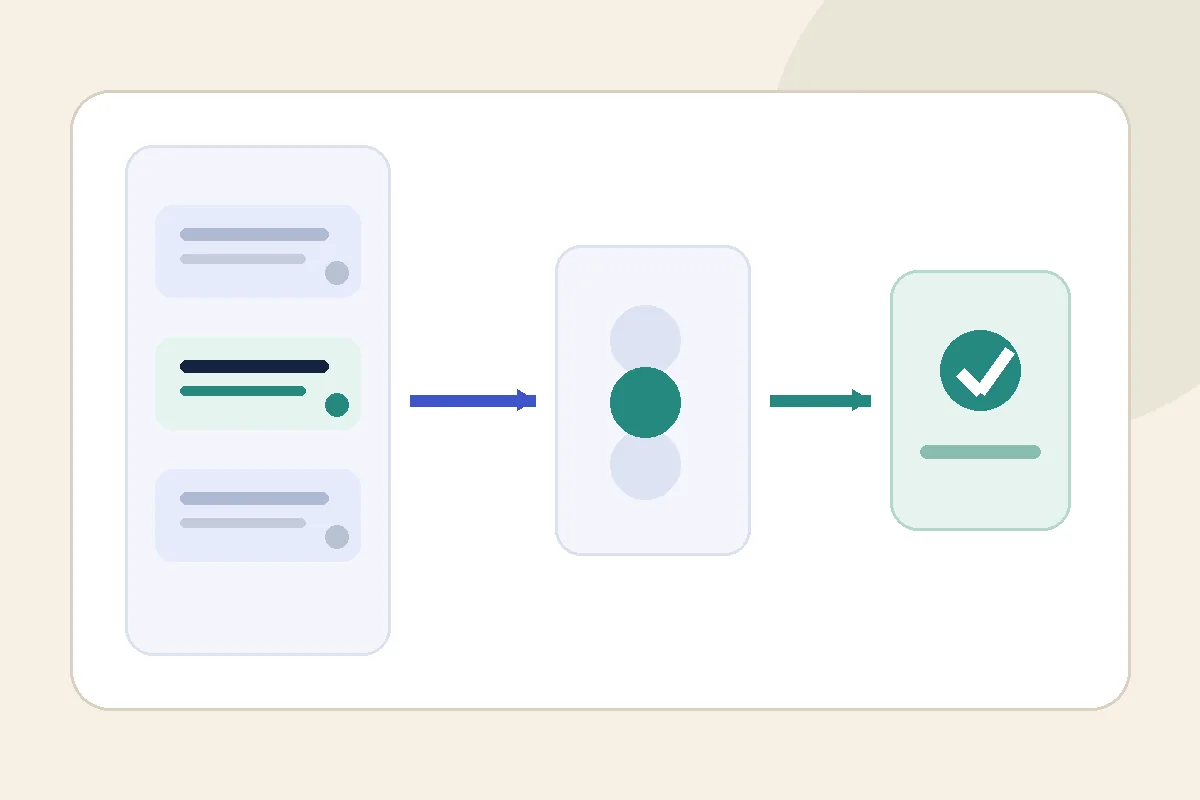
The November 17 arXiv preprint, “Simplicity Goes Far,” asks whether recent automatic prompt optimizers gain their results from their specialized mechanisms or from a shared step: generating candidate prompts and selecting the best. The author introduces Demonstration-Conditioned Prompt Search (DCPS) as a simpler control. It gives a language model examples, asks it to propose candidates, scores those candidates on validation examples and keeps the strongest one. It does not use learned policy updates, reflection or evolutionary search.
The paper compares DCPS with PPO-based StablePrompt and the GEPA optimizer in DSPy compound systems. Its abstract reports results for classification and instruction-following work, including a GPT-4.1-mini setting. This is an audit of particular methods, tasks and reported budgets—not a test of every prompt optimizer or every model.
When a simpler AI prompt optimizer kept up
In the reported classification comparison, DCPS came within 0.5 percentage points of StablePrompt while using roughly one-third of its measured cost. In the reported DSPy comparison on GPT-4.1-mini, it matched GEPA’s macro accuracy with 55% fewer rollouts and 32% lower measured API cost on average. These are results inside the paper’s evaluation setup, not guaranteed savings for your prompts.
The authors also report that heavier optimization retained advantages for some open-ended and reasoning-heavy tasks. That qualification matters: a cheap baseline is useful because it reveals how much a specialized optimizer adds on your task. It does not establish that complex methods are unnecessary.
| Study comparison | Reported result | What to take from it |
|---|---|---|
| DCPS vs StablePrompt on classification | Within 0.5 percentage points; about one-third the measured cost | A simple baseline can be competitive on structured tasks. |
| DCPS vs GEPA in a DSPy system on GPT-4.1-mini | Matched macro accuracy; 55% fewer rollouts and 32% lower average measured API cost | Compare both quality and budget in your own setup. |
| Open-ended and reasoning-heavy tasks | Some heavier methods kept an advantage | Task type can change which optimizer is worth using. |
How to test a prompt optimizer for your own work
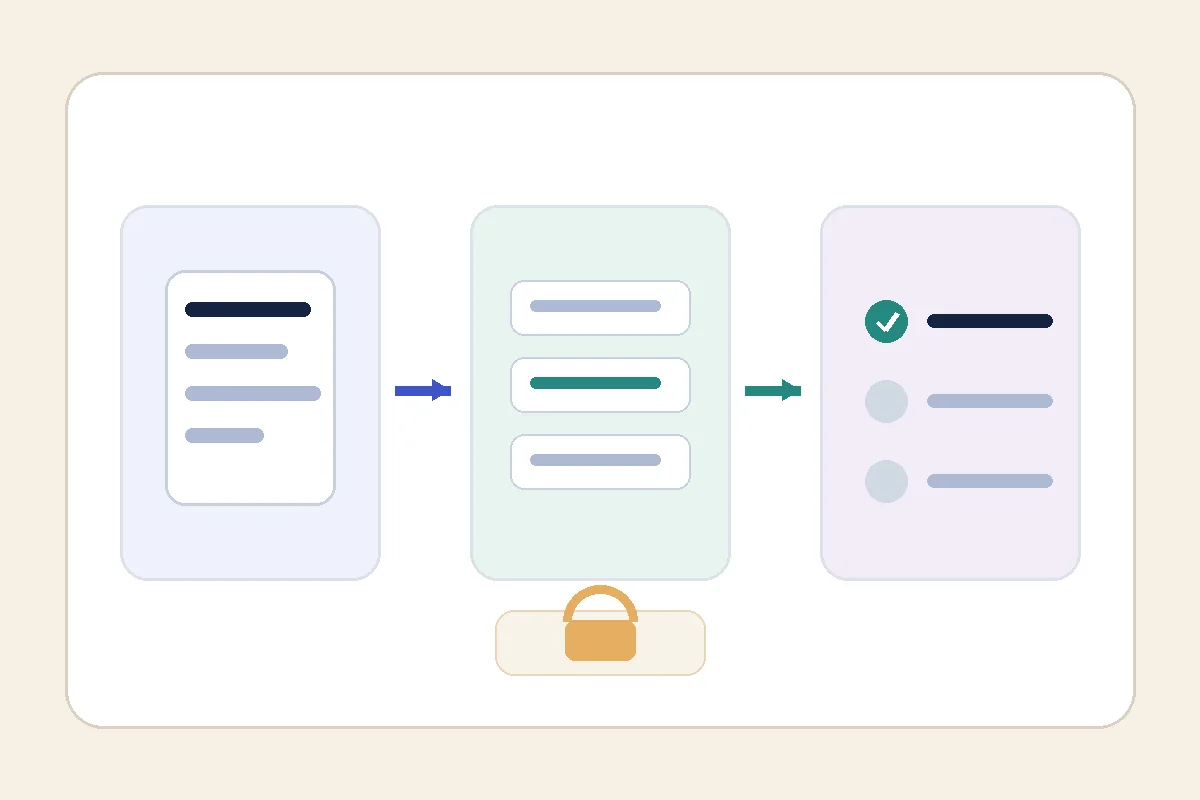
Before buying or adopting an AI prompt optimizer, compare it with a small generate-and-select baseline on examples that represent the real task. Keep the model, candidate count, test set and spending limit consistent. Separate examples used to propose prompts from held-out examples used to judge them, so the optimizer is not graded on answers it has already seen.
Score the outputs against criteria you can explain: correctness, required format, completeness and safe handling of missing information. Record cost per run, number of model calls and failures as well as the best score. Repeat the comparison if results vary. A prompt that wins one lucky run may not be the most reliable choice.
- Start with a plain prompt and a fixed set of representative examples.
- Generate and score a small candidate set under a defined budget.
- Run the leading candidates on examples kept out of prompt generation.
- Compare quality, cost, calls and repeatability before choosing a method.
Copy this prompt-optimizer evaluation template
Use this short brief to compare an optimizer with a baseline. Fill in the same model, examples and budget for every method, and write down the result even when the simpler approach wins.
Task: {{task}}
Model and settings: {{model}}
Prompt methods to compare: {{baseline_and_optimizer}}
Examples used to generate candidates: {{development_examples}}
Held-out evaluation examples: {{test_examples}}
Quality criteria and scoring rule: {{rubric}}
Maximum calls or spend per method: {{budget}}
Record: score, cost, calls, failures, repeatability
Decision and reason: {{decision}}
What this prompt-engineering paper does not prove
This is a recent arXiv preprint, not evidence that every optimizer will behave the same way in production. The reported cost and accuracy depend on the paper’s models, datasets, implementations and budgets. The article’s practical recommendation—to compare with a simple baseline and report both quality and cost—follows from the study’s design; it is a testing approach, not a result independently measured by AIQuickPrompt.
If you use an optimizer, keep versions of the prompt and test cases that matter to your workflow. Then rerun the same checks when the model, instructions or task changes. That makes the optimizer’s value visible and gives you a known-good prompt to return to.