

Prompt Debt in 2026: Why Your Old ChatGPT and Claude Prompts Cost You More (and How to Fix Them)
By Emmanuel Abou Chabke, Founder and Editor · Reviewed by the AIQuickPrompt editorial team · About the publisher
Short answer: prompt debt is the extra cost and lower quality you get from old prompts written for older AI models. Lines like 'think step by step', 'be maximally thorough' or 'act as a world-class expert' were useful in 2023, but newer models in 2026 often do not need them. They add tokens, slow answers down and can even confuse the model. The fix is simple: keep your prompts in one place, review them regularly, trim what is no longer needed and save the improved version. Here is what changed this week and exactly how to do it.

Key takeaways
The quick version before the details.
- Prompts age like code | tricks that helped older models can now waste tokens and money.
- Expert personas ('act as a senior expert') did not reliably improve accuracy in a 5,000-question test and often added cost and wait time.
- Short, structured prompts can match long, complicated ones.
- Shared prompt bundles can hide unwanted instructions, so only reuse prompts you trust.
- A regular prompt review (find, test, trim, version, save) keeps your AI fast and cheap.
Prompt engineering news this week
Several reports published in early November 2026 point in the same direction: better prompts are often shorter, newer and checked regularly.
- Old Claude prompts cost you twice (StartupHub.ai, Nov 7) | an Anthropic engineer says 'prompts accumulate debt just like code' and that reusing repeated context saved up to 72% in internal tests.
- Expert personas can slow AI down (DevFeed, Nov 4) | in a 5,000-question test across four models, persona prompts did not reliably raise accuracy and often used more tokens.
- A two-sentence prompt matched a long method (Programming the Loop, Nov 1) | with about half the reading.
- Prompt adware (Check Point Research, Nov 3) | a shared prompt bundle quietly changed an AI agent's saved instructions to show ads.
- Reliability needs more than wording (AI Coffee News, Nov 7) | the same prompt can give different results, so keep versions and test again.
What is prompt debt?
Prompt debt is everything in your saved prompts that no longer earns its place: old workarounds, repeated rules, contradicting instructions and copy-pasted boosters. Each extra line costs tokens on every run.
It builds up quietly. You write a prompt once, it works, and you keep pasting it for a year while the AI models underneath change several times.
7 outdated prompt habits to drop in 2026
Each habit below shows a before and after. Test the shorter version on your own task before you replace the old one.
- 'Think step by step' on every prompt | Before: 'Think step by step and explain your reasoning.' After: ask for steps only when you need them to see the working.
- Expert personas | Before: 'You are a world-class senior marketing expert with 20 years of experience.' After: 'Write for small business owners. Tone: friendly and direct.'
- 'Be maximally thorough' | Before: 'Be extremely detailed and thorough.' After: 'Answer in 5 bullet points, max 100 words.'
- 'Double-check your work' | Before: 'Double-check everything twice.' After: give the facts or source to check against.
- Shouting rules in capitals | Before: 'NEVER EVER use jargon!!!' After: 'Use plain language.'
- Repeating the same rule 3 times | keep it once, in one clear place.
- Contradicting instructions | Before: 'Be brief' plus 'cover everything'. After: pick one and set a length.
The 5-step prompt review checklist
Do this once a month, or whenever a new AI model comes out.
- 1. Find | gather every prompt you reuse into one place, not scattered chats and notes.
- 2. Test | run your most-used prompts on the model you use today.
- 3. Trim | remove boosters, personas and repeated rules, then test again.
- 4. Version | keep the old version so you can go back if results get worse.
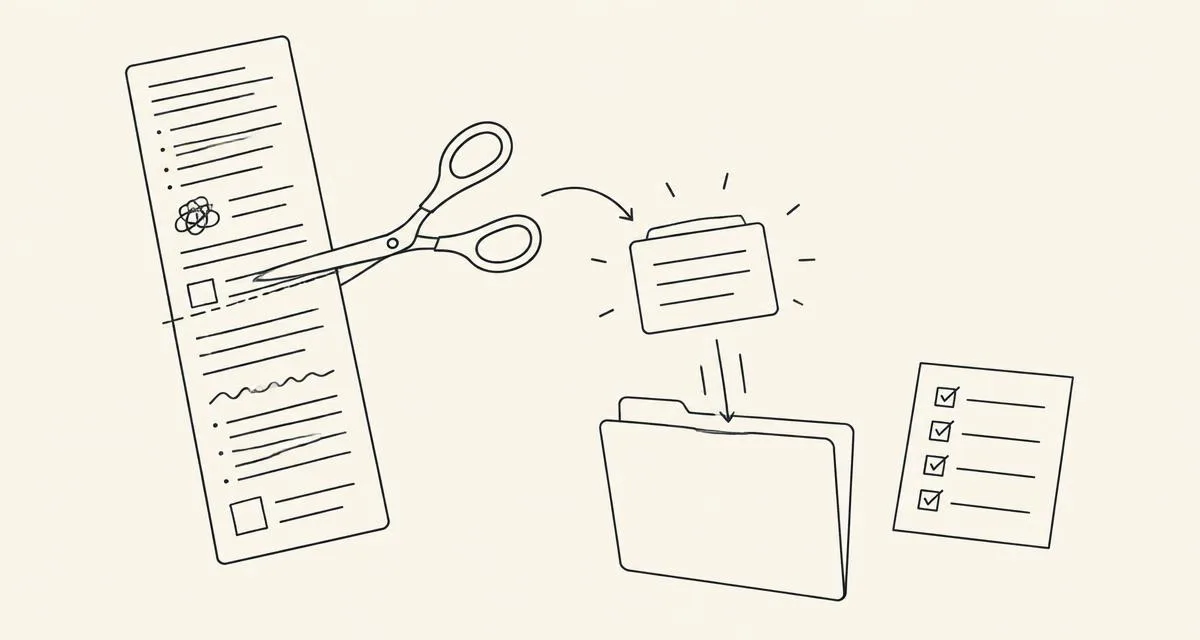
- 5. Save | store the improved prompt with a clear name and folder so the whole team uses the new one.
Prompt safety: be careful with shared prompts
The new 'prompt adware' finding shows that prompts and instruction files can carry hidden instructions. Before you paste a prompt pack from the internet, read it fully and remove anything you do not understand.
- Use prompts from sources you trust.
- Keep your own prompts private and organised.
- Lock sensitive prompts that contain client or business details.
How to clear your prompt debt with AIQuickPrompt
AIQuickPrompt is a private prompt vault that makes the checklist above quick.
- Save every reusable prompt in folders, with tags and favourites.
- AI Optimise rewrites an old prompt to be clearer and shorter for today's models.
- Version history keeps the old prompt in case you want it back.
- Create a 'Needs review' folder and move old prompts there each month.
- Locked folders keep sensitive prompts private.
- Free plan to start | Pro €2.99 a month or €19.99 a year for more AI Optimise and backups.